
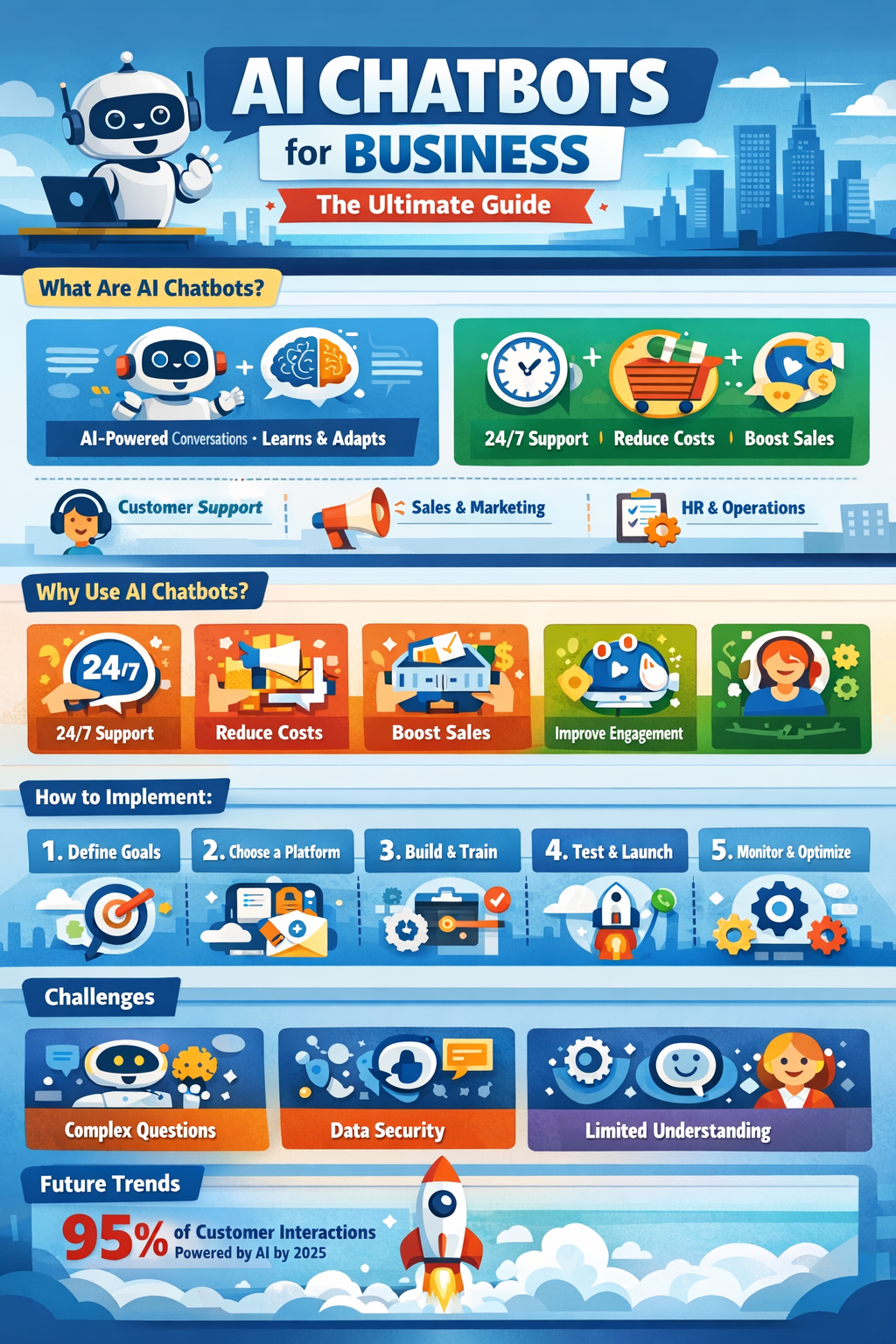
What Are AI Chatbots for Business?
In today’s fast-paced digital world, businesses are constantly looking for innovative ways to enhance customer interactions and streamline operations. One of the most transformative tools emerging in this space is the AI chatbot. But what exactly are AI chatbots for business, and why are they becoming essential for companies of all sizes?
Definition of AI Chatbots
An AI chatbot is a software program powered by artificial intelligence that can simulate human conversation. Unlike traditional rule-based chatbots, which follow scripted responses, AI chatbots use machine learning (ML) and natural language processing (NLP) to understand and respond to user queries dynamically. This allows them to provide personalized, intelligent interactions that feel more natural to customers.
In business contexts, AI chatbots are designed to handle tasks that would normally require human intervention, such as answering frequently asked questions, assisting with purchases, booking appointments, or guiding users through services. By leveraging AI, these chatbots continually learn from interactions, improving their responses over time.http://openbygpt.com
How AI Chatbots Work
The backbone of an AI chatbot is its ability to understand human language and respond intelligently. Here’s a simplified breakdown of how AI chatbots for business operate:
- Natural Language Processing (NLP): This is the AI’s ability to analyze and understand the meaning behind human language. NLP helps chatbots interpret user intent even if the phrasing is varied.
- Machine Learning (ML): Over time, the chatbot learns from interactions, improving its responses and predicting user needs.
- Conversation Flow: Chatbots follow pre-defined conversation structures but can also adapt based on user inputs, providing dynamic and contextual replies.
For example, if a user types, “I want to check my order status,” an AI chatbot can recognize the intent and retrieve relevant information without human intervention.
Key Variations of AI Chatbots for Businesses
AI chatbots are not one-size-fits-all; they come in different forms depending on business needs:
- Customer Support Chatbots: Handle inquiries, provide troubleshooting steps, and guide users to solutions instantly.
- Sales and Marketing Chatbots: Engage potential leads, recommend products, and drive conversions by assisting customers through the buying journey.
- Internal Business Chatbots: Help employees with HR tasks, IT support, or internal workflows, improving efficiency and reducing repetitive tasks.
Fact: According to a report by Business Insider, by 2025, 95% of customer interactions are expected to be powered by AI chatbots, highlighting their growing importance in business strategy.
Why Businesses Are Using AI Chatbots
Businesses across industries are increasingly adopting AI chatbots for business because they offer tangible benefits that improve both customer experience and operational efficiency. From startups to large enterprises, AI chatbots are transforming the way companies engage with their audience.
Benefits of AI Chatbots for Business
- 24/7 Availability and Instant Responses
One of the most significant advantages of AI chatbots is their ability to provide round-the-clock support. Unlike human agents, chatbots never sleep, which means customers can get instant answers anytime, improving satisfaction and loyalty. - Cost Savings on Customer Support
Deploying AI chatbots can significantly reduce operational costs. According to IBM, businesses can save up to 30% on customer support expenses by automating responses to common queries. Chatbots can handle multiple interactions simultaneously, reducing the need for large support teams. - Increased Lead Generation and Sales
AI chatbots are not just for support—they are powerful sales and marketing tools. By guiding users through product choices, answering questions, and offering personalized recommendations, chatbots can boost conversion rates. For instance, e-commerce businesses using AI chatbots have reported up to 25% higher sales due to proactive engagement. - Improved Customer Engagement and Satisfaction
Chatbots provide personalized interactions based on user behavior and preferences. This tailored approach creates a better customer experience, which in turn drives loyalty. Customers appreciate fast, accurate, and helpful responses, which builds trust in your brand.
Industry Applications of AI Chatbots
AI chatbots are versatile and can be applied across multiple industries:
| Industry | Use Cases | Impact |
|---|---|---|
| E-commerce & Retail | Product recommendations, order tracking, customer support | Increased sales, better customer satisfaction |
| Healthcare | Appointment booking, patient queries, symptom triage | Reduced administrative burden, improved patient engagement |
| Banking & Finance | Account inquiries, fraud alerts, loan assistance | Enhanced security, improved efficiency |
| Travel & Hospitality | Booking, itinerary support, customer queries | Faster booking experience, better customer service |
| SaaS & Technology | User onboarding, troubleshooting, feature guidance | Reduced support tickets, higher user retention |
Real-Life Business Case Studies
- Sephora: The global beauty brand uses an AI chatbot to provide product recommendations and tutorials, driving higher online engagement and sales.
- Domino’s Pizza: Domino’s AI chatbot allows customers to order pizzas through multiple platforms like Messenger and voice assistants, streamlining the ordering process and boosting revenue.
- HDFC Bank: The Indian bank uses AI chatbots to answer customer banking queries and guide users through processes like account opening, reducing support costs and improving response times.
Quote: “AI chatbots for business are not just a trend—they are a necessity for companies that want to remain competitive in the digital age.” – Gartner Research
How to Implement AI Chatbots in Your Business
Implementing AI chatbots for business requires careful planning to ensure they deliver value to both customers and the company. A successful deployment goes beyond installing a chatbot—it involves identifying goals, designing conversations, and optimizing performance. Here’s a comprehensive guide for businesses looking to leverage AI chatbots.
Identifying the Right Use Case for Your Business
Before choosing or building a chatbot, it’s essential to identify which business areas will benefit most. Not all processes are suitable for AI automation. Common use cases include:
- Customer Support: Answer FAQs, troubleshoot issues, and guide users through services.
- Sales and Lead Generation: Assist prospects in finding products or services and encourage conversions.
- Internal Operations: Automate repetitive tasks like HR inquiries, IT support, or employee onboarding.
Tip: Start small with one clear use case and expand as the AI chatbot proves its effectiveness.
Choosing the Best AI Chatbot Platform
Selecting the right platform is critical for seamless chatbot integration. Factors to consider include:
- Ease of Integration: Can the chatbot integrate with your website, CRM, messaging apps, or internal tools?
- AI and NLP Capabilities: Ensure the platform understands natural language and adapts to user inputs.
- Analytics and Reporting: Track chatbot performance, customer interactions, and ROI.
- Scalability: The platform should grow with your business needs.
Popular Platforms for Businesses:
- Dialogflow (Google Cloud) – Robust NLP and integration options
- Microsoft Bot Framework – Enterprise-focused with multi-channel support
- ManyChat – Ideal for e-commerce and social media interactions
- Intercom – Customer support and lead generation-focused chatbot platform
Steps to Deploy an AI Chatbot
- Define Objectives and KPIs
Decide what success looks like. Are you aiming to reduce support costs, improve response time, increase sales, or enhance customer satisfaction? Set measurable KPIs. - Design Conversation Flows
Map out potential customer interactions. Identify common questions, decision trees, and possible escalation points to human agents. - Train Your AI Chatbot
Feed the chatbot with historical data, FAQs, and typical customer queries. Machine learning allows it to improve over time with each interaction. - Test Before Launch
Conduct internal testing to ensure accuracy, smooth flow, and appropriate responses. Beta testing with a small user group helps identify gaps. - Monitor Performance and Optimize
Post-launch, continuously monitor chatbot interactions, resolve errors, and refine conversation flows. Use analytics to understand user behavior and improve engagement.
Tips for Successful Implementation
- Start with a Hybrid Model: Combine AI chatbot responses with human agents for complex queries.
- Focus on User Experience: Ensure responses are helpful, polite, and natural.
- Leverage Multi-Channel Support: Make your chatbot accessible via website, mobile app, social media, and messaging apps.
- Regularly Update the AI: Refresh data and retrain models to handle new queries and trends.
Fact: According to Salesforce, 69% of consumers prefer using chatbots for quick communication with businesses, making it a strategic tool for customer engagement.
Common Features of AI Chatbots for Business
AI chatbots have evolved far beyond simple scripted responses. Modern AI chatbots for business come equipped with a variety of features that make them powerful tools for improving customer experience, sales, and internal operations. Understanding these features helps businesses choose the right chatbot for their needs.
Personalized Customer Interactions
One of the most valuable features of AI chatbots is their ability to personalize conversations. By analyzing user data such as previous interactions, preferences, and browsing behavior, AI chatbots can:
- Recommend products or services tailored to individual users
- Address customers by name for a more human-like experience
- Provide contextual responses based on past interactions
Example: An e-commerce AI chatbot can suggest accessories or complementary products based on a customer’s previous purchases, boosting upselling and cross-selling opportunities.
Multi-Channel Support
Today’s customers engage with brands across multiple platforms. AI chatbots can provide consistent support across various channels, including:
- Websites and landing pages
- Mobile apps
- Messaging apps like WhatsApp, Messenger, and Telegram
- Voice assistants like Alexa and Google Assistant
Multi-channel capabilities ensure that customers receive assistance wherever they are, creating a seamless brand experience.
Analytics and Reporting
A major advantage of AI chatbots for business is their ability to collect and analyze data from every interaction. Chatbot analytics help businesses:
- Track common customer questions and pain points
- Monitor response times and customer satisfaction
- Measure conversion rates for sales-focused chatbots
- Identify trends and opportunities for process improvement
Fact: According to HubSpot, companies that leverage chatbot analytics see a 20-30% improvement in operational efficiency within the first year.
Automation of Repetitive Tasks
AI chatbots excel at automating repetitive and time-consuming tasks, allowing human agents to focus on more complex queries. Common automated tasks include:
- Answering FAQs
- Scheduling appointments and meetings
- Processing orders and payments
- Sending reminders and follow-ups
By automating these processes, businesses save time, reduce errors, and provide faster responses, which improves overall customer satisfaction.
Additional Advanced Features
Some modern AI chatbots also include:
- Sentiment Analysis: Detect customer emotions and adjust responses accordingly
- Proactive Engagement: Initiate conversations based on user behavior or inactivity
- Integration with CRMs and ERPs: Sync customer data and streamline workflows
- Voice Interaction Capabilities: Support voice commands for hands-free interactions
AI Chatbots and Customer Experience
A core advantage of AI chatbots for business is their ability to enhance customer experience. In today’s competitive marketplace, delivering fast, accurate, and personalized service is essential. AI chatbots help businesses achieve this while maintaining efficiency and consistency.
How Chatbots Improve Customer Satisfaction
AI chatbots provide several key benefits that directly impact customer satisfaction:
- Instant Responses: Customers no longer have to wait on hold or for email replies. Chatbots respond immediately, reducing frustration.
- 24/7 Availability: Businesses can provide uninterrupted support, addressing issues outside of normal business hours.
- Consistency: Chatbots deliver uniform information, eliminating errors that human agents may occasionally make.
- Personalization: By analyzing previous interactions and customer data, chatbots can offer tailored recommendations and solutions.
Example: A telecom company using AI chatbots can instantly provide billing details, troubleshoot connectivity issues, and offer plan upgrades based on a user’s history, all without human intervention.
Balancing Automation and Human Touch
While AI chatbots are powerful, they are most effective when combined with human agents. Some complex or sensitive issues require a personal touch, so businesses should implement a hybrid support model:
- Escalation to Humans: For queries the chatbot cannot handle, the conversation should seamlessly transfer to a human agent.
- Human Oversight: Regularly reviewing chatbot interactions ensures quality and detects areas for improvement.
- Maintaining Empathy: Even automated responses can be crafted to sound polite, empathetic, and helpful, which improves user trust.
Tip: A hybrid approach ensures efficiency while preserving the human connection, which is crucial for customer loyalty.
Examples of Exceptional Chatbot Experiences
- Lyft: The ride-hailing service uses AI chatbots to assist with booking, trip tracking, and payment issues, providing a smooth and efficient experience.
- H&M: Their chatbot helps customers find clothing items based on preferences, style, and size, offering personalized fashion advice.
- KLM Royal Dutch Airlines: Their chatbot provides real-time flight information, boarding passes, and answers to customer queries, significantly improving travel experience.
Quote: “Customer experience is the new battlefield, and AI chatbots are a critical weapon for businesses seeking to stay ahead.” – Forrester Research
By leveraging AI chatbots, businesses can dramatically improve customer satisfaction, reduce response times, and maintain a high level of service consistency. Properly balancing automation with human support ensures that technology enhances the customer experience rather than replacing it.
Challenges and Limitations of AI Chatbots for Business
While AI chatbots for business offer numerous advantages, they are not without challenges. Understanding these limitations helps businesses implement chatbots more effectively and avoid common pitfalls.
Understanding the Limitations
AI chatbots, despite their sophistication, have certain constraints:
- Language Nuances: Chatbots can struggle with slang, idioms, sarcasm, or complex phrasing, which may lead to misunderstandings.
- Handling Complex Queries: While they excel at routine questions, AI chatbots may fail when faced with multi-step or unusual customer problems.
- Dependence on Data Quality: Poor-quality or insufficient training data can reduce a chatbot’s accuracy and effectiveness.
Fact: According to Gartner, 25% of customer service chatbots fail to fully satisfy user requests, emphasizing the need for careful design and continuous improvement.
Security and Privacy Concerns
Implementing AI chatbots requires handling sensitive customer data, which introduces security and privacy challenges:
- Data Protection: Chatbots often store user information, making them a potential target for data breaches.
- Regulatory Compliance: Businesses must comply with GDPR, CCPA, or other regional privacy regulations when collecting and processing customer data.
- Fraud and Misuse Prevention: Chatbots need safeguards to prevent exploitation or malicious use.
Tip: Encrypt data, implement secure access controls, and regularly audit chatbot interactions to maintain security.
How to Overcome These Challenges
Businesses can mitigate chatbot limitations and risks through several strategies:
- Hybrid Human-AI Model: Combine automation with human support for complex or sensitive queries.
- Regular Updates and Training: Continuously retrain the AI with new customer interactions to improve accuracy.
- Clear Escalation Protocols: Ensure that customers can easily reach a human agent if the chatbot cannot resolve the issue.
- Transparent Communication: Let customers know when they are interacting with a chatbot and how their data is used.
Example: Bank chatbots often handle routine inquiries like account balances and recent transactions but automatically escalate requests for loan approvals or fraud concerns to human agents. This ensures efficiency without compromising accuracy or trust.
While AI chatbots are powerful tools, recognizing and addressing these challenges is essential for businesses to maximize their benefits and provide a safe, reliable, and satisfying experience for users.