
Introduction: Why AI Blogging Tools Are a Game-Changer
In today’s digital age, blogging has become a critical channel for businesses, marketers, and creators to engage audiences, drive traffic, and build authority. However, producing high-quality, consistent, and SEO-friendly content can be time-consuming and resource-intensive. This is where AI blogging tools come in—leveraging artificial intelligence to streamline content creation, optimize for search engines, and enhance creativity.
AI blogging tools are not just about speeding up writing; they are transforming the entire blogging process. From generating topic ideas to crafting full articles, editing, and optimizing content for SEO, these tools help bloggers and businesses work smarter, not harder. According to a report by MarketsandMarkets, the AI in content creation market is expected to reach $1.34 billion by 2027, highlighting the growing importance and adoption of these tools.
These tools are especially valuable for small teams, solopreneurs, and marketing agencies who want to scale their content efforts without sacrificing quality. By automating repetitive tasks and providing data-driven insights, AI blogging tools allow writers to focus on strategic and creative aspects of content marketing, such as storytelling, audience engagement, and brand building.http://openbygpt.com
In this comprehensive guide, we’ll explore everything you need to know about AI blogging tools: what they are, how they work, the types available, their benefits, challenges, future trends, and best practices for bloggers and businesses. By the end of this article, you’ll understand how to leverage these tools to boost efficiency, improve content quality, and maximize ROI from your blogging efforts.
Key highlights you’ll learn in this article:
- The core features and functionality of AI blogging tools
- Types of AI tools for blogs, social media, and SEO
- Measurable benefits and real-world examples
- Challenges and ethical considerations
- Future trends shaping AI blogging
- How to choose and use the right AI blogging tool effectively
Quote: “AI blogging tools aren’t here to replace writers—they’re here to empower them to create smarter, faster, and more engaging content.”
The rise of AI blogging tools represents a paradigm shift in content marketing, enabling anyone from beginner bloggers to large enterprises to produce high-quality content efficiently while staying competitive in an increasingly crowded digital landscape.
What Are AI Blogging Tools?
AI blogging tools are software platforms that leverage artificial intelligence to assist bloggers and content creators in generating, editing, and optimizing written content. Unlike traditional blogging methods, which rely heavily on manual research, writing, and SEO adjustments, AI blogging tools can automate large portions of the content creation process, allowing users to produce high-quality blog posts faster and more efficiently.
At their core, these tools use natural language processing (NLP), machine learning, and generative AI models to understand context, structure sentences, and even mimic a specific tone or writing style. This makes them valuable not just for generating drafts, but also for optimizing content for readability, engagement, and search engine performance.
How AI Blogging Tools Differ from Traditional Blogging Methods
| Aspect | Traditional Blogging | AI Blogging Tools |
|---|---|---|
| Content Creation Speed | Hours to days per article | Minutes to generate drafts |
| SEO Optimization | Manual keyword research and meta tags | Automated keyword suggestions, meta tags, and SEO scoring |
| Creativity | Fully dependent on human creativity | AI assists with ideas, outlines, and suggestions |
| Consistency | Varies between writers | Consistent tone, style, and formatting |
| Scalability | Limited by team size | Can produce large volumes of content quickly |
The table above highlights why AI blogging tools are increasingly popular among marketers, freelance writers, and businesses who want to scale content production without sacrificing quality.
Key Features of AI Blogging Tools
Most AI blogging tools include a combination of the following features:
- Automated Content Generation: Write full articles, blog posts, product descriptions, and social media updates.
- SEO Optimization: Suggests keywords, meta descriptions, headings, and readability improvements.
- Tone and Style Customization: Adjusts content to match brand voice or specific audience preferences.
- Plagiarism and Grammar Checking: Ensures content is original and error-free.
- Analytics and Performance Tracking: Monitors engagement metrics, SEO performance, and content quality.
These features make AI blogging tools suitable for a wide range of users, from solo bloggers to enterprise content teams. They provide the ability to produce professional-quality content at scale while maintaining control over messaging and branding.
How AI Blogging Tools Work
AI blogging tools operate through three main processes:
- Understanding Context: NLP algorithms analyze your input prompt, topic, or existing content to understand intent and target audience.
- Content Generation: AI uses generative models to produce coherent, structured, and contextually relevant content, following the guidelines and tone you specify.
- Optimization and Feedback: AI tools provide suggestions to improve readability, SEO, and engagement. Some platforms even offer analytics to track performance and guide future content.
Example: A blogger wants to write a post about “sustainable travel tips.” Instead of manually researching and drafting, an AI blogging tool can generate a complete draft with headings, subtopics, keywords, and even a meta description, all optimized for search engines. The blogger then reviews and personalizes the content, reducing overall writing time significantly.
Types of AI Blogging Tools
The market for AI blogging tools is diverse, with different types designed to meet specific content needs. Understanding the types of tools available helps bloggers, marketers, and businesses choose the right solution for their workflow and goals. Here’s a detailed breakdown:
1. AI Writing Assistants
AI writing assistants are the most common type of blogging tool. They help generate blog posts, articles, and drafts quickly, reducing the time spent on research and writing.
Key Features:
- Automatic generation of blog posts and article drafts
- Grammar and tone adjustments
- Writing style customization to match brand voice
- Suggestions for topic ideas and headlines
Examples: Jasper, Writesonic, Copy.ai
Use Case: A freelance blogger can generate a full blog post draft in minutes and then focus on adding personal insights and images.
2. AI SEO and Content Optimization Tools
These tools are focused on optimizing blogs for search engines. They ensure that AI-generated content ranks well on Google and other search engines by providing keyword suggestions, meta descriptions, and content structure improvements.
Key Features:
- Keyword research and semantic analysis
- On-page SEO optimization for headings, meta tags, and links
- Content scoring and readability analysis
- Competitor content and gap analysis
Examples: SurferSEO, Frase, MarketMuse
Use Case: A digital marketing agency uses an AI SEO tool to optimize blog posts for target keywords, improving organic traffic without extensive manual research.
3. AI Content Research Tools
AI content research tools analyze trends, audience interests, and competitor content to help bloggers create relevant and high-performing content. They assist with brainstorming ideas and identifying gaps in existing content.
Key Features:
- Trend analysis for popular topics
- Audience insight analytics
- Competitor content audits
- Suggested blog structures based on performance data
Examples: BuzzSumo, Ahrefs Content Explorer (AI-assisted features), GrowthBar
Use Case: A blogger can discover trending topics in their niche and generate outlines that are more likely to perform well online.
4. AI Multimedia Content Tools
Some AI blogging tools go beyond text and include visual and multimedia content creation. These are particularly useful for blogs that require images, infographics, video, or audio content.
Key Features:
- AI-generated images, charts, and infographics
- Automated video scripts and captions
- Voiceovers and audio content generation
- Integration with blogging platforms for seamless publishing
Examples: Canva AI, Pictory, Lumen5
Use Case: A lifestyle blogger can create an infographic summarizing key points in their blog, generated automatically by AI, enhancing visual engagement.
5. AI Workflow and Publishing Automation Tools
These tools focus on streamlining the entire blogging workflow, from content creation to publishing. They can help schedule posts, suggest optimal publishing times, and automate cross-platform sharing.
Key Features:
- Automated publishing to CMS platforms (WordPress, Shopify, etc.)
- Social media scheduling and sharing
- Analytics dashboards to track content performance
- Integration with AI content generators for seamless workflow
Examples: Buffer (AI-assisted), SocialBee, CoSchedule
Use Case: A content marketing team can manage multiple blogs and social accounts, ensuring consistency and efficiency across all channels.
How Different AI Blogging Tools Work Together
For maximum efficiency, many bloggers and businesses combine multiple AI tools in a single workflow:
- Use an AI research tool to identify trending topics and gaps.
- Generate a draft with an AI writing assistant.
- Optimize for SEO using an AI SEO tool.
- Add visuals with an AI multimedia tool.
- Schedule and publish via an AI workflow automation tool.
This approach allows teams to produce high-quality, SEO-optimized, and engaging blogs faster than ever before.
Benefits of Using AI Blogging Tools
The adoption of AI blogging tools has transformed the way bloggers, marketers, and businesses create content. From improving efficiency to enhancing creativity and boosting SEO, these tools offer numerous advantages that make them indispensable in modern content marketing.
1. Increased Productivity and Efficiency
AI blogging tools significantly reduce the time required to create high-quality content. Tasks that previously took hours—like drafting, researching, and formatting—can now be completed in minutes. This allows bloggers and content teams to produce more content without expanding resources.
Key Points:
- Automates repetitive tasks like SEO optimization and grammar checks
- Generates content drafts quickly, freeing up time for strategic work
- Enables consistent publishing schedules without delays
Data Insight: Businesses using AI writing tools report 30–50% faster content production, allowing teams to focus on higher-value tasks like strategy and audience engagement.
2. Enhanced Creativity and Idea Generation
AI blogging tools are not just for automation—they are powerful creativity assistants. They can generate topic ideas, suggest content angles, and even recommend new formats based on audience trends and search data.
Benefits Include:
- Overcoming writer’s block
- Suggesting unique headlines, subtopics, or blog structures
- Inspiring fresh approaches for niche topics
Example: A travel blogger could input “sustainable travel” as a topic, and the AI tool can generate multiple blog angles like eco-friendly accommodations, zero-waste travel tips, and budget-friendly sustainable travel guides.
3. Improved SEO and Search Rankings
Most AI blogging tools integrate SEO optimization into the content creation process. They can identify relevant keywords, suggest meta descriptions, structure headings, and even help target featured snippets.
SEO Benefits:
- Identifies high-performing keywords for your niche
- Ensures proper on-page SEO for blogs and web content
- Helps improve organic traffic and search visibility
- Suggests internal and external linking opportunities
Fact: Websites using AI-driven SEO tools report up to 20–30% increase in organic traffic within a few months due to better-optimized content.
4. Consistency in Brand Voice and Messaging
Maintaining a consistent tone and style across multiple blog posts and platforms can be challenging. AI blogging tools allow brands to standardize their voice, ensuring every piece of content aligns with branding guidelines.
Key Advantages:
- Consistent tone across multiple authors or content creators
- Reduces errors in messaging
- Enhances professional appearance and brand recognition
5. Cost Efficiency and Scalability
Hiring multiple writers or outsourcing content creation can be expensive. AI blogging tools allow businesses to produce large volumes of content with fewer resources, reducing costs while maintaining quality.
Benefits Include:
- Lower cost per article compared to hiring freelance writers
- Ability to scale content efforts rapidly
- Higher return on investment (ROI) for content marketing campaigns
6. Real-World Case Studies
Case Study 1:
A mid-sized e-commerce brand implemented an AI blogging tool for product descriptions and blog content. Within 3 months, they published 200+ optimized articles, resulting in a 25% increase in organic traffic and higher engagement rates.
Case Study 2:
A digital marketing agency used AI tools to generate social media posts and blog drafts. Posting frequency doubled, while engagement metrics like clicks and shares increased by 30%, demonstrating the efficiency and effectiveness of AI-assisted blogging.
Summary Table: Key Benefits
| Benefit | Impact |
|---|---|
| Productivity | Faster content creation and reduced workload |
| Creativity | Generates fresh ideas and angles for blogs |
| SEO Optimization | Higher search rankings and organic traffic |
| Brand Consistency | Uniform tone and messaging across all content |
| Cost Efficiency | Lower production costs and scalable output |
| Data-Driven Insights | AI analytics help optimize strategy |
The use of AI blogging tools empowers bloggers and businesses to create more content faster, smarter, and more effectively. They enhance creativity, improve SEO, and save time, making them essential in the modern content marketing landscape.
Challenges and Limitations of AI Blogging Tools
While AI blogging tools offer numerous advantages, they are not without challenges. Understanding these limitations is essential for bloggers, marketers, and businesses to use AI effectively and responsibly. Without proper oversight, relying solely on AI can lead to issues with originality, quality, and SEO performance.
1. Risk of Generic or Low-Originality Content
AI tools generate content based on existing data and patterns. While this allows for quick content creation, it can sometimes result in generic or repetitive outputs that lack uniqueness and personality.
Challenges Include:
- Content may feel formulaic or robotic
- Difficulty in differentiating your blog from competitors using similar AI tools
- Risk of producing low-value content that does not fully engage readers
Solution: Always review, edit, and add personal insights to AI-generated content to ensure originality and authenticity.
2. Over-Reliance on AI Reducing Human Creativity
While AI can assist with brainstorming and drafting, it cannot replicate human creativity, intuition, or storytelling skills. Over-dependence on AI can result in content that lacks personality or emotional connection with readers.
Areas Where Human Input is Crucial:
- Writing opinion pieces, personal experiences, or thought leadership blogs
- Adding humor, cultural context, or storytelling elements
- Tailoring content to highly specific audience segments
Tip: Use AI as an assistant, not a replacement, for human creativity.
3. Ethical and Plagiarism Concerns
AI blogging tools pull from existing content to generate new articles, which raises ethical concerns. Misuse can lead to plagiarism or biased outputs, potentially harming your credibility.
Potential Issues:
- Unintentional replication of existing content
- Bias in generated content due to AI training datasets
- Lack of transparency about AI-generated content for readers
Best Practice: Disclose the use of AI when appropriate and verify content for originality and fairness.
4. SEO Pitfalls
AI-generated content can be optimized for search engines, but improper use may negatively impact rankings. Search engines value quality, relevance, and originality, and AI content that is overly automated may not meet these standards.
Common SEO Mistakes:
- Keyword stuffing or unnatural keyword placement
- Thin content lacking depth or value
- Duplicate content issues if multiple AI tools produce similar outputs
Solution: Use AI for research and initial drafts, then refine and enrich the content manually to ensure SEO effectiveness.
5. Quality Control and Oversight
Even the best AI blogging tools can produce errors, inconsistencies, or factually inaccurate information. Without human review, content quality may suffer.
Best Practices for Quality Control:
- Proofread AI-generated content for grammar, clarity, and flow
- Fact-check statistics, data, or claims
- Ensure alignment with brand voice and editorial guidelines
- Use analytics to monitor performance and adjust content strategy
Summary Table: Challenges vs Solutions
| Challenge | Impact | Mitigation |
|---|---|---|
| Generic content | Lacks originality | Human editing and personalization |
| Reduced creativity | Robotic or emotionless writing | Combine AI with human storytelling |
| Ethical issues | Plagiarism, bias | Fact-check, review, disclose AI use |
| SEO risks | Lower rankings or penalties | Refine content for depth, avoid keyword stuffing |
| Quality control | Errors or inconsistencies | Proofread and monitor analytics |
Although AI blogging tools provide efficiency and scalability, human oversight, creativity, and ethical responsibility are essential for producing high-quality, engaging, and trustworthy content. Balancing AI assistance with human expertise ensures that your blog maintains authenticity and SEO performance.
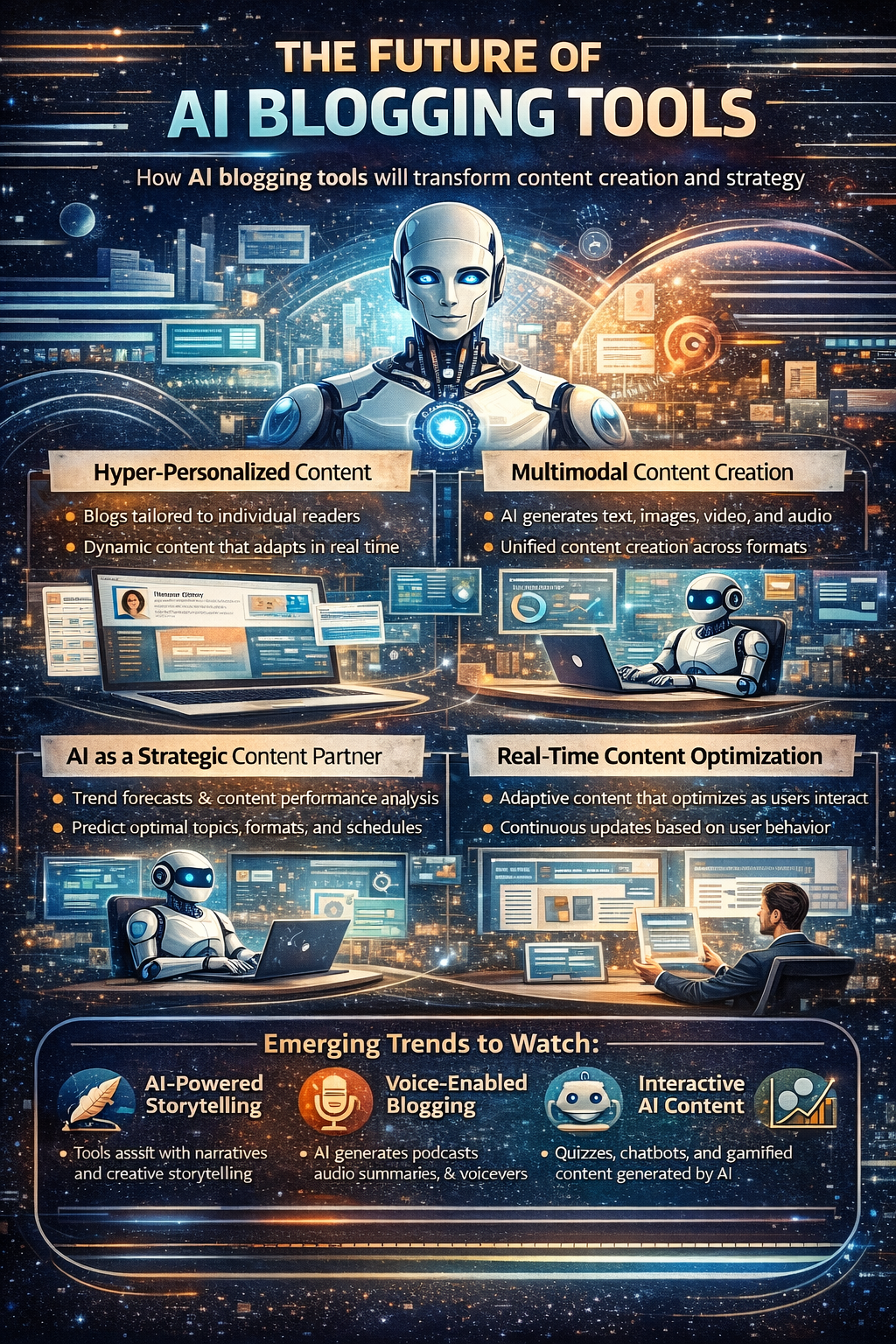
The Future of AI Blogging Tools
The future of AI blogging tools is evolving rapidly, promising to reshape content creation, strategy, and marketing in profound ways. As AI technology becomes more sophisticated, these tools will not just assist in writing—they will act as creative collaborators, strategists, and content optimizers, empowering bloggers and businesses to produce smarter, faster, and more engaging content.
1. Hyper-Personalized Content
Future AI blogging tools will move beyond generic content generation to create hyper-personalized content tailored to individual readers’ preferences, behavior, and engagement history.
Capabilities:
- Personalized blog posts and articles based on reader demographics or interests
- Dynamic content that adjusts in real-time to user engagement
- Customized tone and style for niche audience segments
Impact: Hyper-personalized content will increase engagement, dwell time, and conversions by delivering exactly what readers want.
2. Multimodal Content Creation
Next-generation AI tools will seamlessly integrate text, images, video, and audio. This means bloggers could generate a full content package—including an article, infographics, social media snippets, and video summaries—from a single AI platform.
Benefits:
- Faster production of rich, multi-format content
- Consistent branding and messaging across platforms
- Enhanced user engagement through interactive and multimedia content
Example: A health and fitness blogger could generate a workout blog post with a video demo, step-by-step infographic, and social media teaser—all automatically generated by AI.
3. AI as a Strategic Content Partner
The future will see AI not only creating content, but also guiding content strategy. Advanced AI will analyze trends, predict content performance, and recommend optimal topics, formats, and posting schedules.
Capabilities:
- Predict trending topics using real-time data
- Identify content gaps and competitor weaknesses
- Provide actionable insights on engagement, conversions, and SEO
- Recommend content formats that maximize ROI
This transforms AI from a writing assistant into a strategic partner for content marketing.
4. Real-Time Content Optimization
AI blogging tools will become adaptive, continuously optimizing content in real-time based on user behavior. Websites, blog posts, or email content could automatically update to increase engagement and relevance.
Applications:
- Real-time SEO adjustments for live content
- Dynamic blog updates based on reader interaction
- Personalized recommendations within blog posts
Impact: Content will remain highly relevant, increasing reader satisfaction and organic search performance.
5. Ethical and Responsible AI
As AI-generated content becomes more common, future AI blogging tools will include built-in ethical safeguards to ensure transparency, reduce bias, and avoid plagiarism.
Future Enhancements:
- AI-generated content labeling for transparency
- Automatic citation and source attribution
- Bias detection and correction
- Ethical content guidelines integrated into AI workflows
Outcome: These measures will help maintain trust between content creators and audiences while ensuring responsible AI use.
6. Emerging Trends to Watch
| Trend | Description | Impact |
|---|---|---|
| AI-Powered Storytelling | Tools that assist with narratives and creative storytelling | More engaging and emotionally resonant blogs |
| Voice-Enabled Blogging | AI generates podcasts, audio summaries, and voiceovers | Expands reach to audio-first audiences |
| Interactive AI Content | Quizzes, chatbots, and gamified content generated by AI | Higher engagement and retention |
| Predictive Content Analytics | AI predicts which topics and formats will perform best | Smarter planning and higher ROI |
The future of AI blogging tools is not about replacing human writers. Instead, it’s about augmenting creativity, improving efficiency, and enabling smarter content strategies. Bloggers and businesses who adopt these tools early will gain a competitive edge in the rapidly evolving digital landscape.